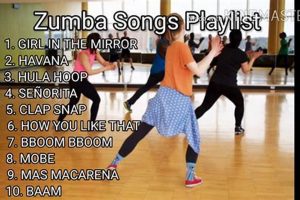
Music specifically designed for Zumba Toning classes is characterized by rhythmic structures and tempo suitable for incorporating light resistance training. These musical selections typically blend upbeat Latin rhythms with contemporary pop or international sounds. The purpose of this type of music is to motivate participants while simultaneously facilitating movements that enhance muscle engagement and strength.
The integration of appropriately-paced and motivating musical accompaniment can significantly impact the effectiveness of a Zumba Toning workout. Such music provides a structured framework for performing exercises with proper form and timing, thereby increasing muscular endurance and calorie expenditure. Furthermore, the enjoyable nature of the music enhances participant adherence and fosters a positive workout experience. This approach has become a popular method for combining cardio fitness with strength training elements.
The following sections will delve into the selection criteria for music in these specialized classes, explore specific examples of effective musical choices, and discuss how instructors leverage these selections to maximize the benefits of the routine.
Guidance for Zumba Toning Musical Selection
Effective utilization of musical selections is crucial to the success of Zumba Toning programs. The following considerations are presented to aid in the selection of music that optimizes participant engagement and fitness outcomes.
Tip 1: Tempo Synchronization: Evaluate the tempo of the music to ensure it aligns with the intended pace of the toning exercises. An appropriate beats-per-minute (BPM) range is generally between 128 and 145, facilitating controlled movements and sustained muscle engagement.
Tip 2: Rhythmic Variation: Introduce variety in rhythmic patterns to challenge participants and maintain interest. A mix of Latin, international, and contemporary beats prevents monotony and enhances the overall workout experience.
Tip 3: Instrumentation and Melody: Prioritize music with clear, defined instrumentation and melodies that are motivating but not distracting. Strong percussive elements can aid in maintaining rhythm, while memorable melodies promote engagement.
Tip 4: Lyrical Content Considerations: Be mindful of lyrical content. While lyrics can enhance motivation, they should be appropriate and avoid potentially offensive or distracting themes.
Tip 5: Structuring Song Playlists: Construct the playlist to incorporate a warm-up phase (slower tempo), a core strengthening phase (moderate tempo with focused movements), and a cool-down phase (slower tempo with stretching). The order of music selection should mirror the intensity of the exercise routines.
Tip 6: Incorporating Music Transitions: Seamless transitions between musical selections maintain the flow of the workout and minimize disruptions. Practice blending tracks to create a continuous and engaging exercise experience.
Adherence to these guidelines can assist in maximizing the effectiveness of Zumba Toning routines through deliberate and informed musical selection.
The subsequent sections will provide practical examples and strategies for applying these musical selection criteria in a Zumba Toning setting.
1. Tempo Calibration

Tempo calibration constitutes a foundational element in the effective deployment of music within Zumba Toning programs. The synchronization of tempo to the specific exercises is not arbitrary; rather, it directly influences participant adherence to correct form and sustained muscular engagement. If the tempo is excessively rapid, participants may sacrifice proper form to maintain pace, increasing the risk of injury. Conversely, a tempo that is too slow may diminish the intensity of the workout, reducing its overall effectiveness. The appropriate tempo supports consistent execution, essential for achieving the toning and strengthening goals of the exercise routine.
Consider the example of performing lunges with hand weights. A musical track with a tempo in the range of 128-135 BPM may be suitable. This pace allows individuals to lower themselves into the lunge position with control, maintain balance, and engage the quadriceps and gluteal muscles effectively. In contrast, using a track with a tempo exceeding 140 BPM for this exercise is likely to compromise the participant’s ability to maintain proper alignment and execute the movement with deliberate muscle activation. Similarly, slower tempos, such as those below 120 BPM, may not provide sufficient stimulus to maintain engagement and perceived intensity.
Understanding the nuanced relationship between tempo and exercise efficacy is crucial for Zumba Toning instructors. Proper tempo calibration contributes significantly to both safety and effectiveness, enabling participants to achieve the intended physical benefits while minimizing the potential for injury. It is recommended that instructors analyze their planned exercises and select musical tracks that specifically support the movement patterns and desired intensity levels. Furthermore, the ability to accurately assess and adjust the tempo of music to match the exercise requirements is a key determinant of instructor competence in this specialized fitness discipline.
2. Rhythmic Diversity

The inclusion of rhythmic diversity within musical selections for Zumba Toning is a critical factor in promoting sustained participant engagement and optimizing the overall effectiveness of the fitness program. Variations in rhythm not only prevent monotony but also provide a multi-faceted stimulus that challenges different muscle groups and enhances coordination.
- Genre Integration
The incorporation of multiple musical genres, such as Latin, Afrobeat, and pop, introduces rhythmic complexities that require participants to adapt their movements, thereby improving motor skills and coordination. For example, transitioning from a merengue rhythm, characterized by its fast tempo and distinct two-beat pattern, to a cumbia rhythm, which possesses a slower tempo and syncopated accents, necessitates a shift in movement patterns, engaging different muscle groups and enhancing proprioception.
- Tempo Modulation
Strategic modulation of tempo within a Zumba Toning class is essential for targeting different muscle groups and energy systems. A gradual increase in tempo during a set of exercises can progressively challenge muscular endurance, while a sudden shift to a slower tempo can facilitate recovery and allow for controlled movements during targeted toning exercises. Varying tempo can ensure consistent participant interest and physical challenge throughout the workout.
- Instrumentation Variation
Distinct rhythmic emphasis can be achieved through variations in instrumentation. A musical track that incorporates strong percussion elements can facilitate movements that emphasize power and explosiveness, whereas tracks featuring melodic instruments may be more conducive to controlled, sustained movements that focus on muscle isolation and definition. The strategic use of instrumentation adds another layer of complexity and engagement.
- Accent Placement
Altering the placement of rhythmic accents introduces unexpected variations in movement patterns, challenging participants’ coordination and improving their ability to react to changes in the music. For example, shifting the accent from the downbeat to an off-beat can require participants to anticipate and execute movements with greater precision, thereby enhancing both physical and cognitive engagement.
The effective implementation of rhythmic diversity within Zumba Toning sessions requires instructors to possess a deep understanding of various musical genres, tempos, instrumentation, and rhythmic patterns. By strategically incorporating these elements into their playlists, instructors can enhance the overall effectiveness of the program and create a dynamic and engaging fitness experience for participants.
3. Motivational Lyrics

The presence and character of motivational lyrics within musical compositions significantly influence the efficacy and participant experience of Zumba Toning sessions. The lyrical component is not merely an accompaniment but serves as a driving force, impacting mood, intensity, and adherence to the exercise regimen.
- Enhanced Perceived Exertion
Motivational lyrics can alter the perception of physical effort, potentially making the workout feel less strenuous. Uplifting or encouraging phrases embedded within the song can act as a psychological distraction from the discomfort associated with exercise. For instance, lyrics emphasizing strength, perseverance, or positive body image may encourage participants to push beyond perceived limitations. This effect can lead to increased workout duration and intensity, resulting in greater overall fitness gains.
- Synchronization and Movement Alignment
Lyrics often provide rhythmic cues that unconsciously guide movement, promoting better synchronization and coordination during exercise. Phrases that align with specific movements, such as squats or arm raises, can reinforce correct form and timing. This alignment can be particularly beneficial in Zumba Toning, where precision and control are essential for maximizing muscle engagement and preventing injury. Specific examples of call-and-response lyrical patterns can enhance participant engagement and adherence to the intended choreography.
- Emotional Connection and Engagement
Music with lyrics that resonate emotionally with participants can foster a deeper connection to the workout. Lyrics that express themes of empowerment, joy, or overcoming challenges can inspire a sense of personal investment in the exercise routine. The emotional engagement stimulated by motivational lyrics can increase enjoyment, reduce boredom, and promote long-term adherence to the Zumba Toning program. This connection can result in a more immersive and rewarding fitness experience, thereby enhancing motivation and commitment.
- Cultural Relevance and Inclusivity
Lyrics that reflect cultural diversity and inclusivity can broaden the appeal of Zumba Toning to a wider range of participants. Including songs with lyrics in multiple languages or those that celebrate diverse cultural traditions can create a more welcoming and inclusive environment. This inclusivity can foster a sense of community among participants, further enhancing motivation and adherence. Instructors should be mindful of the lyrical content to ensure it is respectful and appropriate for the diverse group.
The strategic incorporation of motivational lyrics, therefore, is a valuable tool for Zumba Toning instructors seeking to enhance participant engagement, improve exercise adherence, and optimize the overall effectiveness of the fitness program. Consideration should be given to the lyrical themes, rhythmic alignment, emotional resonance, and cultural relevance when selecting music for these classes.
4. Instrumentation Clarity

Instrumentation clarity, within the context of music utilized for Zumba Toning, refers to the distinct separation and audibility of individual instrumental sounds within a musical arrangement. The clarity of instrumentation directly impacts participants’ ability to discern rhythmic cues and execute precise movements, thus influencing the efficacy of the exercise routine.
- Rhythmic Cue Definition
Clearly defined percussive elements, such as drums, snares, and claps, facilitate the identification of the primary rhythmic pulse. This pulse serves as a guide for synchronization, enabling participants to coordinate their movements with the music. A muddy or indistinct mix obscures these cues, potentially leading to a loss of rhythm and improper execution of toning exercises. Consider, for instance, a track where the bass line overwhelms the snare drum. In such a scenario, participants may struggle to maintain the correct tempo, leading to diminished effectiveness of the workout.
- Melodic Line Differentiation
The separation of melodic instruments, such as synthesizers, guitars, or horns, enhances the overall auditory experience and prevents the music from becoming monotonous. When melodies are clearly articulated, participants can engage with the music on a deeper level, thereby increasing motivation and enjoyment. A well-defined melody line also allows for the incorporation of call-and-response movements, where participants mimic melodic phrases with specific physical actions. Conversely, a poorly mixed track where the instruments bleed together can create a sonic wall that is fatiguing and demotivating.
- Frequency Spectrum Balance
Effective instrumentation clarity necessitates a balanced frequency spectrum, where low, mid, and high frequencies are represented in appropriate proportions. An overemphasis on bass frequencies can result in a muddy and overpowering sound, masking other essential rhythmic and melodic elements. Conversely, an excess of high frequencies can create a harsh and fatiguing auditory experience. The ideal instrumentation clarity will be a balanced representation, which aids in concentration and sustains energy.
- Layered Instrument Identification
Modern music production techniques often involve layering multiple instruments and sound effects to create complex sonic textures. Instrumentation clarity ensures that each layer is distinct and identifiable, preventing the overall mix from becoming cluttered. This allows participants to focus on specific rhythmic or melodic elements, facilitating more precise and controlled movements. An example of this is how Zumba Toning could incorporate layering of instruments but clarity would be maintained, which facilitates movement precision and control among its participants.
In conclusion, instrumentation clarity is a critical component of effective Zumba Toning music. By ensuring that rhythmic cues are well-defined, melodic lines are differentiated, frequency spectrums are balanced, and instrument layers are identifiable, instructors can enhance participant engagement, improve exercise execution, and optimize the overall effectiveness of the program. Music production should be adjusted accordingly to meet the needs of participants in Zumba Toning.
5. Structure Adherence

Structure adherence, in the context of musical selection for Zumba Toning, refers to the intentional organization and sequencing of musical tracks within a class to optimize the workout’s physiological and psychological benefits. It is a critical element of effective program design, ensuring a balanced and progressive exercise experience aligned with specific fitness goals.
- Warm-Up Phase Alignment
The initial musical selections must correspond with the warm-up phase, characterized by lower tempos and simplified rhythmic patterns. These songs prepare the musculoskeletal system for more intense activity by gradually increasing blood flow to the muscles and elevating core body temperature. The structure demands adherence to tempo and lyrical themes that encourage ease and preparation rather than exertion.
- Peak Intensity Sequencing
The core of the Zumba Toning session necessitates musical tracks that facilitate high-intensity intervals targeting specific muscle groups. The structure requires songs with tempos that match the exercisesfor example, tracks with a steady, driving beat for squat sequences or songs with pronounced accents for weighted arm exercises. The playlist structure must also accommodate variations in intensity to prevent premature fatigue.
- Cool-Down and Recovery Integration
The final segment necessitates a structural adherence to slower tempos and mellow melodies that promote relaxation and recovery. These musical selections facilitate a gradual decrease in heart rate and blood pressure, preventing post-exercise hypotension. The structure of this segment may also include tracks with lyrical content that encourages reflection and positive self-image.
- Transitions and Flow Consistency
Seamless transitions between songs are essential for maintaining the momentum and flow of the Zumba Toning session. Structure adherence demands careful planning to ensure that transitions between tracks are smooth and intuitive, minimizing disruptions and maintaining participant engagement. This necessitates attention to key, tempo, and rhythmic compatibility between consecutive musical selections.
In essence, structure adherence in music selection for Zumba Toning classes is paramount for creating a well-rounded and effective fitness experience. By systematically organizing and sequencing musical tracks to align with specific phases of the workout, instructors can optimize physiological and psychological benefits, fostering enhanced participant engagement and achieving desired fitness outcomes.
Frequently Asked Questions
This section addresses common inquiries regarding the selection and utilization of musical tracks for Zumba Toning sessions. The aim is to clarify misconceptions and provide practical guidance for instructors.
Question 1: What constitutes “Zumba Toning Songs?”
These are musical compositions specifically chosen or created to complement Zumba Toning exercises. Tracks typically feature an upbeat tempo, often within the 128-145 BPM range, and are structured to facilitate both cardiovascular movement and light resistance training. Latin rhythms are frequently incorporated, but other genres may be used.
Question 2: Why is tempo calibration critical when selecting music for Zumba Toning?
Accurate tempo calibration ensures synchronization between movement and music. An appropriate tempo facilitates controlled exercise execution, maximizing muscle engagement and minimizing the risk of injury. Tempos too fast or slow compromise form and effectiveness.
Question 3: What role do lyrics play in music selections for Zumba Toning?
Lyrics serve as a motivational element, potentially altering the perception of exertion and enhancing participant engagement. Songs featuring lyrics with empowering or encouraging messages can improve adherence. However, lyrical content should be carefully vetted for appropriateness and relevance to the target audience.
Question 4: How does instrumentation clarity influence the effectiveness of Zumba Toning?
Instrumentation clarity ensures individual instrumental sounds are distinct and audible, allowing participants to discern rhythmic cues effectively. Clear percussion, melodic lines, and balanced frequency spectrums facilitate accurate movement execution and enhance the overall auditory experience.
Question 5: Why is structural adherence important when creating a playlist for Zumba Toning?
Structural adherence involves strategically organizing and sequencing tracks to align with the warm-up, peak intensity, and cool-down phases. This ensures a balanced and progressive workout, optimizing physiological benefits and promoting participant safety.
Question 6: Can generic “workout music” be substituted for music specifically designed for Zumba Toning?
While generic workout music may provide a suitable tempo, it may lack the specific rhythmic patterns, motivational lyrics, and instrumentation clarity required for optimal Zumba Toning performance. Customized playlists designed to support the unique demands of Zumba Toning are recommended.
Effective music selection requires careful consideration of tempo, lyrical content, instrumentation, and playlist structure. These elements collectively contribute to a safe, engaging, and effective Zumba Toning experience.
The following section will discuss potential legal considerations regarding the use of copyrighted musical works in Zumba Toning classes.
Conclusion
The preceding sections have meticulously explored the characteristics and strategic considerations relevant to the selection and utilization of music in Zumba Toning classes. Emphasis has been placed on the importance of tempo calibration, rhythmic diversity, motivational lyrics, instrumentation clarity, and structural adherence. Each element contributes significantly to the overall effectiveness and participant experience within this fitness modality.
The careful application of these principles is critical for instructors seeking to optimize workout outcomes and maintain participant engagement. A deep understanding of musical composition, combined with a thorough knowledge of exercise physiology, is essential for maximizing the potential benefits of Zumba Toning. Continued research and refinement of musical strategies within this field will further enhance its impact on individual fitness and well-being.