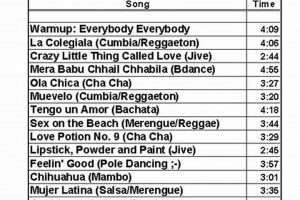
The musical component within a Zumba class is a vital element, providing the rhythmic foundation that drives movement and energy. These musical selections are typically characterized by high-energy tempos, often drawing inspiration from Latin American genres such as salsa, merengue, cumbia, and reggaeton. The specific tracks chosen by an instructor dictate the choreography and overall intensity of a particular session. A fast-paced cumbia rhythm, for instance, will inspire different movements than a slower salsa tune.
The integration of vibrant and engaging music is fundamental to the success and enjoyment of the Zumba fitness program. The carefully selected sounds contribute to a motivating and immersive experience, encouraging participants to engage more fully in the physical activity. Furthermore, exposure to a variety of international rhythms can introduce participants to new cultures and musical styles. Historically, the incorporation of lively music has been a core aspect of Zumbas appeal, differentiating it from more traditional fitness routines.
Understanding the role of specific musical elements opens avenues to explore the selection criteria employed by instructors, the copyright considerations involved in using popular music within a fitness setting, and the evolving trends in musical preferences within the fitness industry.
Guidance on Musical Selections for Zumba Classes
This section provides insights into effectively incorporating musical tracks into Zumba sessions to maximize participant engagement and fitness benefits. Consider these aspects when selecting music.
Tip 1: Genre Variety is Crucial: Incorporate various Latin rhythms (salsa, merengue, cumbia, reggaeton) and international styles to cater to diverse preferences and provide a comprehensive rhythmic experience. A repetitive reliance on a single genre may diminish participant engagement.
Tip 2: Tempo Considerations: Vary tempo strategically throughout the class. High-intensity tracks boost caloric expenditure, while slower segments allow for recovery and focused instruction. A balanced approach optimizes both cardiovascular benefits and participant comfort.
Tip 3: Phrasing and Choreography Alignment: Ensure musical phrases align with choreography changes. Smooth transitions prevent abrupt disruptions and enhance the flow of the session. Misalignment can lead to participant confusion and decreased performance.
Tip 4: Beat Matching for Seamless Transitions: Employ beat-matching techniques to seamlessly blend tracks. Abrupt tempo or key changes can disrupt the workout’s momentum. Software tools and playlists designed for fitness classes can aid in this process.
Tip 5: Volume Control and Sound Quality: Maintain appropriate volume levels to avoid hearing damage. Invest in quality sound equipment to ensure clear audio reproduction. Distorted or excessively loud audio detracts from the experience and can pose health risks.
Tip 6: Copyright Compliance: Adhere to all copyright regulations when using recorded material in a commercial fitness setting. Obtain necessary licenses to avoid legal repercussions. Explore royalty-free music options as an alternative.
Tip 7: Monitor Participant Feedback: Regularly solicit feedback regarding musical preferences. This information provides valuable insights for refining musical selections and maximizing participant satisfaction. Surveys or brief verbal feedback sessions can be beneficial.
Prioritizing genre variety, tempo variations, choreographic alignment, seamless transitions, volume control, copyright compliance, and participant feedback significantly improves the quality and effectiveness of Zumba sessions.
The integration of these guidelines will contribute to an improved Zumba experience and foster continued participation.
1. Rhythmic Foundation

The rhythmic foundation is inextricably linked to musical selections employed within Zumba classes. It provides the underlying structure upon which choreography is built, and the driving force for participant movement.
- Tempo as a Determinant of Intensity
Tempo dictates the intensity of the workout. Higher tempos correspond to more demanding physical exertion, whereas slower tempos allow for recovery periods and less vigorous routines. The musical beat-per-minute rate directly influences the heart rate of participants, thus impacting cardiovascular engagement. For instance, a track with 130 BPM promotes higher energy output than a 100 BPM song.
- Syncopation and Complexity of Movement
Syncopation, the emphasis of off-beat rhythms, introduces complexity in movements and promotes coordination. The rhythmic complexity of the chosen music necessitates varied steps and increases the cognitive demands on participants, furthering skill development. For instance, music with complex clave patterns often inspire dynamic, multi-layered choreographies.
- Genre Specific Groove
Each genre contributes a characteristic groove to the overall rhythmic experience. Cumbia grooves are characterized by a swaying hip motion, whereas salsa grooves involve intricate footwork and upper-body movements. These genre-specific elements inform both the instructor’s choreographic choices and the participants’ movement patterns.
- Predictability and Pattern Recognition
The underlying rhythmic structure of the selections establishes a predictable pattern, allowing participants to anticipate changes in the music and choreography. Predictability facilitates movement coordination and creates a sense of embodied understanding, improving participant confidence. For instance, the four-count structure common in many Latin rhythms provides a reliable framework for choreographic sequencing.
The interplay between the rhythmic base and the musical source shapes both the physical and mental experience of Zumba, demonstrating the essential part of musical foundation on the entire fitness process.
2. Genre Diversity

Genre diversity within the selection of musical tracks is a critical determinant of participant engagement and the overall appeal of Zumba fitness programs. The deliberate inclusion of various musical styles extends beyond mere entertainment, impacting physical exertion, cultural exposure, and long-term adherence to the fitness regimen.
- Expanded Audience Reach
Incorporating a broad spectrum of genres, such as salsa, merengue, cumbia, reggaeton, hip-hop, and international pop, can attract a wider range of participants. By catering to diverse musical tastes, Zumba classes avoid alienating potential attendees and increase the likelihood of recurring participation. An individual who is uninterested in traditional Latin rhythms might find motivation in a class incorporating Afrobeat or dancehall selections.
- Enhanced Physical Challenge
Different genres often necessitate distinct movement patterns and levels of physical demand. For example, implementing a high-energy reggaeton track requires explosive movements and increased cardiovascular exertion, while a slower cumbia allows for improved core stability and balance. Strategic genre variety challenges participants to adapt to different rhythms, fostering physical versatility.
- Cultural Immersion and Appreciation
Exposure to a variety of musical traditions can foster cultural awareness and appreciation. The inclusion of international music provides an opportunity to learn about different cultures and their respective dance forms. For instance, incorporating Bollywood-inspired sequences can introduce participants to Indian music and movement styles.
- Sustained Motivation and Engagement
Genre diversity prevents monotony and boredom, which can be significant factors in participant attrition. By continually introducing new musical styles and choreographic sequences, instructors can maintain a high level of participant interest. A constantly evolving playlist demonstrates a commitment to providing a fresh and engaging fitness experience.
In summary, the mindful integration of varied musical styles is essential for optimizing the benefits and inclusivity of Zumba. A diverse musical selection not only caters to a wider audience but also enhances the physical challenge, fosters cultural awareness, and sustains participant motivation over time, reinforcing the program’s effectiveness.
3. Tempo Variation

Tempo variation constitutes a critical element within musical selection and arrangement for Zumba fitness programs. The deliberate manipulation of tempo directly influences the physiological and psychological responses of participants. The tempo, measured in beats per minute (BPM), dictates the speed at which the music progresses, thereby impacting the intensity of physical activity. Increased tempo corresponds to heightened cardiovascular demand, promoting aerobic conditioning and caloric expenditure. Conversely, decreased tempo allows for active recovery, facilitating muscle recuperation and preventing overexertion. Zumba instructors strategically utilize tempo variations to structure workouts, alternating high-intensity intervals with lower-intensity periods to optimize fitness benefits and reduce the risk of injury. An example includes transitioning from a high-energy reggaeton song at 135 BPM to a slower salsa piece at 110 BPM, thus facilitating a controlled decrease in exertion.
Furthermore, tempo variation plays a crucial role in maintaining participant engagement and preventing monotony. Prolonged exposure to a uniform tempo can lead to decreased motivation and reduced adherence to the fitness program. Integrating contrasting tempos introduces novelty and stimulates cognitive function, as participants must adapt to changing rhythmic patterns. For instance, a Zumba routine may incorporate a rapid-fire cumbia segment followed by a slower, more deliberate bachata sequence. This alternation not only challenges physical endurance but also enhances coordination and mental agility. The inclusion of songs with varying tempos also provides instructors with greater flexibility in designing choreographic sequences, allowing for the integration of diverse dance styles and movement patterns.
In conclusion, tempo variation is not merely an aesthetic consideration but rather a fundamental aspect that contributes significantly to the effectiveness and sustainability of Zumba. Its careful implementation allows for optimized physiological conditioning, improved participant engagement, and enhanced choreographic creativity. Addressing the challenge of selecting tempo-appropriate music necessitates a thorough understanding of exercise physiology and the psychological effects of musical stimuli. This emphasis on tempo aligns with the broader theme of optimizing Zumba as a holistic fitness activity.
4. Motivational Lyrics
The integration of motivational lyrics within a piece used for Zumba is a factor affecting participant engagement and perceived exertion. The lyrical content, while not always explicitly fitness-related, contributes to the overall atmosphere and can indirectly influence a participant’s willingness to persist through demanding routines. The selection of tracks that feature uplifting themes or positive affirmations, irrespective of the language, often correlates with increased energy levels observed within a class. For instance, a track featuring the Spanish phrase “Vamos!” (Let’s go!) repeatedly can serve as a verbal cue that encourages participants to maintain or increase their effort.
The impact of lyrics extends beyond the semantic meaning; the rhythmic structure and vocal delivery also play a role. Upbeat tempos combined with enthusiastic vocal performances can create a synergistic effect, enhancing the motivational impact. Songs with simple, repetitive lyrics are often more effective, as they are easily understood and remembered, allowing participants to sing along and engage more fully in the experience. For example, a popular Zumba tune featuring a straightforward chorus that repeats the name of a dance move reinforces the step while contributing to a collective sense of enthusiasm. Furthermore, incorporating songs in various languages introduces diversity and fosters cultural appreciation. Although participants may not fully understand the literal meaning, the emotional tone and rhythm can still evoke positive responses.
In essence, the inclusion of motivational lyrics within the selection of a Zumba track serves as a crucial component influencing energy levels and participant involvement. The strategic selection of material that uses uplifting, rhythmic lyrics contributes to the perceived atmosphere, fostering more significant participation. Addressing the practical implications, it is important to note that the understanding of motivational lyrics, along with carefully planned music selections, enables instructors to maximize the benefits of a Zumba class and promote a more positive exercise experience.
5. Cultural Representation

The integration of cultural elements within Zumba underscores its global appeal and commitment to diversity. Musical and choreographic choices frequently reflect various traditions, fostering both an inclusive environment and opportunities for cultural appreciation.
- Authenticity and Appropriation
Maintaining a balance between authentic representation and cultural appropriation is paramount. Instructors must demonstrate respect for the origins and significance of the dance styles and musical genres they incorporate. Superficial adoption without understanding or acknowledgment of cultural roots can be detrimental, leading to misrepresentation and disrespect. Conversely, well-researched and thoughtfully integrated elements promote genuine appreciation and understanding.
- Genre Selection and Geographical Diversity
Musical selection from geographically diverse regions broadens the cultural exposure of participants. While Latin rhythms are central to Zumba, incorporating music from Africa, Asia, and other regions diversifies the experience and introduces participants to a wider range of musical traditions. This diversity fosters a more inclusive and engaging environment that appeals to a broader audience.
- Choreographic Influences and Stylistic Interpretation
The fusion of various dance styles in Zumba choreography reflects a dynamic interplay of cultural influences. Instructors should clearly communicate the origins and stylistic nuances of incorporated dance forms, providing context for the movements. Accurate and respectful interpretation of these influences contributes to a more enriching and educational experience for participants.
- Language and Lyrical Content
The inclusion of lyrics in different languages not only exposes participants to linguistic diversity but also offers opportunities to explore cultural themes and narratives. While understanding the literal meaning of lyrics is not always essential, instructors can provide translations or contextual explanations to enhance the cultural experience. This approach promotes a deeper understanding and appreciation of the cultural values embedded within the musical content.
The careful consideration of authenticity, geographical diversity, choreographic influences, and linguistic diversity ensures that cultural representation within music fosters an inclusive and respectful environment. By celebrating the richness of global traditions, Zumba transcends mere fitness, becoming a platform for cultural exchange and appreciation.
Frequently Asked Questions Regarding Zumba Music
The following addresses common inquiries and misconceptions concerning the musical components utilized in Zumba fitness programs.
Question 1: What are the licensing implications of using popular tracks in Zumba classes?
Zumba instructors are legally required to obtain appropriate licenses for any copyrighted music used in commercial fitness settings. Failure to secure these licenses can result in legal action from copyright holders. Performance rights organizations (PROs) such as ASCAP, BMI, and SESAC manage these licenses, offering blanket agreements for fitness facilities or individual instructors.
Question 2: Are there specific BPM (beats per minute) ranges recommended for different segments of a Zumba class?
Yes, strategic manipulation of BPM is fundamental to structuring an effective Zumba workout. Warm-up tracks typically fall within the 110-120 BPM range, while high-intensity segments often utilize music between 130-145 BPM. Cool-down songs should be in the 90-100 BPM range to facilitate gradual heart rate reduction.
Question 3: How is musical selection influenced by the target demographic of a Zumba class?
Musical preferences vary significantly across different age groups and cultural backgrounds. Instructors should tailor the playlist to align with the tastes of their target audience. For example, a class primarily composed of younger adults may benefit from the inclusion of current pop and electronic music, while a class catering to older adults might prefer classic Latin rhythms or familiar international tunes.
Question 4: What constitutes culturally appropriate music selection in Zumba?
Culturally appropriate music selection involves respecting the origins and significance of incorporated musical genres. Instructors should avoid superficial or stereotypical representations and prioritize authentic material. A thorough understanding of the cultural context surrounding a song or dance style is essential to avoid misrepresentation and ensure respectful integration.
Question 5: How does the lyrical content of music impact the perceived exertion and motivation of Zumba participants?
Lyrical content, even if not fully understood by all participants, can significantly influence perceived exertion and motivation. Upbeat tempos combined with positive or encouraging lyrics can create a synergistic effect, increasing energy levels and fostering a more engaging experience. Repetitive and easily memorable phrases tend to be most effective in eliciting a positive response.
Question 6: Is it advisable to incorporate music from outside of traditional Latin genres in Zumba classes?
Yes, the incorporation of diverse musical styles, including African, Asian, and contemporary pop music, can enhance the appeal and inclusivity of Zumba. However, it is crucial to maintain a balance between traditional Latin rhythms and other genres to retain the core identity of Zumba while catering to broader musical tastes.
The strategic selection and integration of musical elements significantly impact the effectiveness and enjoyment of Zumba fitness programs. Addressing these frequently asked questions ensures informed decision-making and responsible practices.
Consideration of the musical aspects addressed here will contribute to enhanced program development and participant engagement.
Conclusion
The preceding exploration has demonstrated that the musical component, or “zumba song,” is integral to the fitness program. The rhythmic foundation, genre diversity, tempo variation, motivational lyrics, and cultural representation, each contributes distinctly to the overall effectiveness and participant experience. These elements function synergistically to create an environment conducive to physical exertion, sustained engagement, and cultural awareness. A deficiency in any of these areas can detrimentally impact the program’s success and participant adherence.
Therefore, continued emphasis on thoughtful musical selection, licensing compliance, and culturally sensitive practices is essential to ensure the continued efficacy and ethical integrity of Zumba fitness programs. A comprehensive understanding of the multifaceted role of the musical element will serve to enhance the fitness landscape and further broaden its appeal.