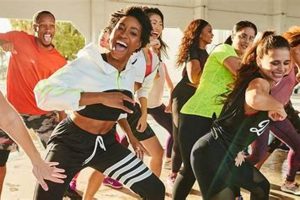
The process of becoming qualified to lead Zumba classes encompasses several key elements, including obtaining a Zumba Basic 1 Instructor Training certificate. This foundational training equips prospective instructors with the basic steps, rhythms, and teaching techniques essential for leading effective Zumba sessions. This initial certification is a prerequisite for teaching officially licensed Zumba classes.
Possessing the skills to create engaging choreography, demonstrating exceptional leadership qualities, and fostering a motivating class environment are beneficial attributes. A strong understanding of rhythm, musicality, and cueing techniques also helps instructors lead participants effectively. Maintaining current knowledge of fitness trends and safety guidelines further enhances instructional capabilities and protects participants.
The subsequent paragraphs will delve into the specifics of obtaining the required certifications, developing essential instructor skills, and understanding the responsibilities associated with leading Zumba classes. Furthermore, this discussion will cover aspects of class preparation, participant safety, and ongoing professional development relevant to Zumba instruction.
Essential Guidance for Aspiring Zumba Instructors
The following guidance addresses key considerations for individuals seeking to become qualified and effective Zumba instructors. These points are designed to provide practical advice and insight into the process of acquiring the necessary skills and knowledge.
Tip 1: Prioritize Foundational Training: Successful completion of the Zumba Basic 1 Instructor Training is non-negotiable. This certification provides the fundamental movement patterns and instructional methodologies crucial for leading Zumba classes safely and effectively.
Tip 2: Cultivate Strong Musicality: Develop a deep understanding of Latin rhythms and their application to Zumba choreography. This includes accurately counting beats, identifying musical cues, and selecting appropriate music to enhance the workout experience.
Tip 3: Master Cueing Techniques: Effective cueing is critical for guiding participants through routines and preventing injuries. Practice verbal and non-verbal cues to clearly communicate upcoming movements and transitions.
Tip 4: Focus on Clear and Engaging Choreography: Create routines that are both challenging and accessible to a diverse range of fitness levels. Prioritize clear, logical sequences of movements to maximize participant engagement and minimize confusion.
Tip 5: Emphasize Participant Safety: Possess a strong understanding of proper form and technique to prevent injuries. Regularly assess participants’ form and provide corrections as needed.
Tip 6: Foster an Inclusive Class Environment: Create a welcoming and supportive atmosphere where participants feel comfortable regardless of their fitness level or dance experience. Encourage modifications and adaptations to accommodate individual needs.
Tip 7: Seek Continuous Professional Development: Zumba is a dynamic fitness program. Stay updated on new routines, techniques, and safety guidelines through ongoing education and training.
By focusing on foundational training, musicality, effective cueing, well-designed choreography, participant safety, an inclusive environment, and continuous learning, aspiring instructors can establish themselves as qualified and impactful leaders in the Zumba community.
The subsequent section will provide insight into maintaining a successful Zumba practice, exploring marketing strategies, and building a strong client base.
1. Certification

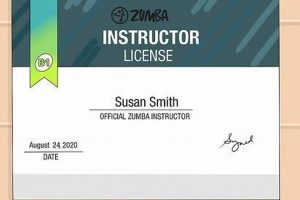
Certification serves as a foundational pillar in the process of becoming a qualified Zumba instructor. It establishes a baseline competency and ensures adherence to the established standards of the Zumba program. Possession of a valid certification is often a prerequisite for teaching licensed Zumba classes and represents a commitment to professionalism and participant safety.
- Zumba Basic 1 Training
The Zumba Basic 1 Instructor Training is the initial and essential certification for aspiring instructors. This training provides the core techniques, rhythms, and instructional methodologies necessary to conduct basic Zumba classes. Successful completion of this program demonstrates proficiency in the fundamental elements of the Zumba program and constitutes the first step towards becoming a licensed Zumba instructor. Without this foundation, individuals are not authorized to teach Zumba classes under the Zumba Fitness, LLC license.
- Specialty Certifications
Beyond the Basic 1 certification, Zumba offers a range of specialty certifications focusing on specific demographics or fitness goals. These include Zumba Kids, Zumba Gold (for active older adults), Zumba Toning, and Aqua Zumba. Obtaining specialty certifications allows instructors to broaden their skillset and cater to a wider variety of participants. These credentials demonstrate a commitment to specialized knowledge and can enhance an instructor’s marketability.
- Renewal and Continuing Education
Zumba certifications typically require periodic renewal to ensure instructors remain current with program updates, safety guidelines, and new choreography. Continuing education opportunities are often available to enhance instructor skills and knowledge. Maintaining valid certifications through renewal and participating in continuing education demonstrates a commitment to ongoing professional development and ensures that instructors are providing the most up-to-date and effective Zumba instruction.
- Insurance and Liability
While Zumba certifications provide training and authorization to teach, they do not inherently protect instructors from liability. Many fitness facilities and insurance providers require instructors to maintain personal liability insurance to cover potential accidents or injuries occurring during their classes. Possession of a Zumba certification may be a prerequisite for obtaining liability insurance, emphasizing the interconnectedness of certification and professional responsibility.
In summary, the acquisition and maintenance of Zumba certifications are integral to “what does it take to be a zumba instructor”. These credentials demonstrate foundational knowledge, specialized skills, and a commitment to ongoing professional development, all of which contribute to safe and effective Zumba instruction. While certification is a crucial first step, successful Zumba instruction also requires the development of strong leadership skills, engaging choreography, and a passion for fitness, effectively blending the technical and interpersonal elements of instruction.
2. Musicality

Musicality forms a cornerstone of effective Zumba instruction. The connection between musicality and the core requirements of a Zumba instructor is direct and profound. Zumba, by its very nature, is a dance-fitness program inextricably linked to music. Instructors must possess a comprehensive understanding of rhythm, tempo, and musical structure to effectively guide participants through choreography. The ability to accurately interpret the music and translate its nuances into corresponding movements is paramount. For example, an instructor lacking a strong sense of rhythm will struggle to cue transitions effectively, leading to participant confusion and a diminished workout experience. Conversely, an instructor with well-developed musicality can seamlessly blend movements with the music, creating an engaging and motivating atmosphere.
Beyond basic rhythm identification, skilled instructors can recognize different musical styles and adapt their choreography accordingly. A Zumba class incorporating salsa, cumbia, and reggaeton requires the instructor to differentiate between these genres and tailor their steps to match each distinct style. The success of a Zumba class often hinges on the instructor’s ability to select appropriate music that aligns with the intensity level and desired outcome of the workout. Furthermore, musicality extends to the instructor’s capacity to blend different musical pieces into a cohesive and energizing playlist, maintaining a consistent flow and maximizing participant enjoyment.
Ultimately, musicality is not merely a desirable trait for a Zumba instructor; it is an essential skill that directly impacts the quality and effectiveness of their classes. Without a strong foundation in musicality, an instructor’s ability to lead, motivate, and engage participants is significantly compromised. The ability to feel the music, interpret its rhythms, and translate them into effective and inspiring choreography is central to achieving the objectives of Zumba instruction, highlighting the crucial and integral role of musicality in the profession.
3. Leadership

Leadership is a vital component of effective Zumba instruction. A Zumba instructor does not merely lead a class through a series of steps; they must motivate, inspire, and create a welcoming environment for participants of varying fitness levels and backgrounds. The ability to lead effectively directly impacts participant engagement, motivation, and overall class experience. The following facets explore essential leadership qualities in the context of Zumba instruction.
- Creating an Inclusive Environment
A core aspect of leadership in Zumba instruction is fostering an inclusive and supportive environment. This involves making participants feel comfortable and welcome, regardless of their fitness level or dance experience. Instructors must be aware of potential barriers to participation and actively work to create a judgment-free zone. Demonstrating empathy, offering modifications for different fitness levels, and celebrating individual progress contribute to an inclusive atmosphere, encouraging participants to embrace the fitness journey.
- Effective Communication and Motivation
Leadership necessitates clear and effective communication. A Zumba instructor must be able to articulate instructions concisely and motivate participants through positive reinforcement. Verbal cues, non-verbal cues (body language), and motivational phrases are essential tools. Providing specific feedback, acknowledging effort, and highlighting achievements contribute to increased participant confidence and adherence. Skilled instructors adapt their communication style to meet the diverse needs of their participants, ensuring everyone feels supported and encouraged.
- Demonstrating Enthusiasm and Energy
Enthusiasm is contagious, and a Zumba instructor’s energy significantly impacts the class atmosphere. Demonstrating passion for Zumba and genuine excitement for participant success is crucial. Maintaining high energy levels throughout the class, projecting confidence, and leading with positivity create a dynamic and engaging experience. This enthusiasm inspires participants to push themselves, enjoy the workout, and return for future classes.
- Adaptability and Problem-Solving
Leadership also involves the ability to adapt to unforeseen circumstances and solve problems effectively. A Zumba instructor may need to modify choreography on the fly, address participant concerns, or manage unexpected technical issues. Remaining calm, composed, and resourceful in the face of challenges demonstrates strong leadership qualities and ensures the smooth operation of the class. The ability to think critically and make decisions quickly is essential for maintaining a positive and productive learning environment.
In conclusion, leadership extends beyond simply leading a Zumba class through its choreography. It requires creating an inclusive environment, communicating effectively, demonstrating enthusiasm, and adapting to challenges. These leadership qualities are integral to what a Zumba instructor should exhibit. An instructor who embodies these qualities not only provides a fitness class but also empowers participants to achieve their goals, build confidence, and embrace a healthy lifestyle.
4. Choreography

Choreography represents a fundamental element in effective Zumba instruction. It is the carefully designed sequence of movements that forms the structure of a Zumba class. An instructor’s ability to create engaging, safe, and effective choreography significantly impacts the overall quality of the workout experience and the extent to which participants achieve their fitness goals. Competent choreography, thus, is inextricable from the skillset of a successful Zumba instructor.
- Routine Design and Structure
A well-designed Zumba routine should exhibit a clear and logical structure. This involves incorporating a warm-up, a high-intensity cardio section, a cool-down, and stretching. The sequence of steps should be progressive, gradually increasing in complexity and intensity. The choreography must also consider the transitions between different dance styles and fitness elements, ensuring a smooth and seamless flow. The lack of a coherent structure can lead to participant confusion and an ineffective workout.
- Musicality and Movement Synchronization
Choreography must be intrinsically linked to the music. Movements should synchronize with the rhythm, tempo, and accents of the song. This requires a deep understanding of musicality and the ability to translate musical cues into corresponding steps. Mismatched choreography can disrupt the flow of the class and detract from the overall enjoyment. Instructors must select music that inspires movement and create choreography that complements the musical style.
- Accessibility and Adaptability
Effective choreography considers the diverse fitness levels and physical abilities of participants. Routines should be adaptable, allowing instructors to offer modifications and variations to accommodate individuals with limitations. Overly complex or physically demanding choreography can exclude some participants and increase the risk of injury. Instructors must prioritize inclusivity and ensure that everyone can participate at their own pace and level of comfort.
- Creativity and Innovation
While adherence to Zumba’s core principles is important, successful instructors also incorporate creativity and innovation into their choreography. This involves developing unique routines, experimenting with different dance styles, and finding new ways to engage participants. Original and exciting choreography can differentiate an instructor and attract a loyal following. However, creativity must be balanced with safety and accessibility to ensure that all participants can benefit from the workout.
In summary, choreography is a critical determinant of a Zumba instructor’s success. The ability to design well-structured, musically synchronized, accessible, and innovative routines is essential for providing a positive and effective fitness experience. The choreography skills directly influence participant engagement, motivation, and overall satisfaction, solidifying choreography as a key attribute for “what does it take to be a Zumba instructor”.
5. Safety Awareness

Safety awareness is a paramount consideration in the profile of a qualified Zumba instructor. Negligence in this area can lead directly to participant injury, diminished class attendance, and potential legal ramifications. Instructors bear a responsibility to ensure a safe environment, and a lack of diligence in this area disqualifies an individual from providing competent Zumba instruction. This consideration connects directly to the core concept of what qualities define a successful and responsible Zumba instructor.
Specific examples of safety awareness in practice include providing clear and concise instructions on proper form to prevent musculoskeletal injuries, particularly regarding high-impact movements. Instructors must also be able to recognize signs of fatigue, dehydration, or overexertion in participants and proactively offer modifications or suggest breaks. Consideration must also be given to the physical space, ensuring the floor is suitable for dancing and free of obstacles. Understanding basic first aid and CPR procedures is beneficial, providing instructors with the skills necessary to respond effectively in emergency situations.
Ultimately, safety awareness is not merely a desirable attribute but a fundamental requirement. It reflects a commitment to the well-being of participants and distinguishes a responsible instructor from one who prioritizes only the dance or fitness aspect. Challenges remain in ensuring consistent safety protocols across all Zumba classes, emphasizing the need for ongoing training and education for instructors. Integrating safety awareness into every aspect of Zumba instruction, from choreography to class management, is vital for establishing a culture of health and well-being within the Zumba community.
Frequently Asked Questions
The following questions address common inquiries regarding the qualifications and requirements for becoming a certified Zumba instructor. These answers aim to provide clarity and a comprehensive understanding of the process.
Question 1: Is prior dance experience required to become a Zumba instructor?
Prior dance experience is not a strict requirement, although a background in dance can be beneficial. The Zumba Basic 1 Instructor Training provides the foundational knowledge and skills necessary to lead Zumba classes, regardless of prior dance experience. Success as an instructor depends more on possessing rhythm, enthusiasm, and the ability to motivate participants.
Question 2: What specific certifications are needed to teach Zumba classes?
The Zumba Basic 1 Instructor Training certification is essential to begin teaching Zumba classes. Subsequent certifications, such as Zumba Kids, Zumba Gold, or Zumba Toning, allow instructors to expand their expertise and cater to specific populations. Maintaining current certifications through renewal is also important.
Question 3: How long does it take to become a certified Zumba instructor?
The Zumba Basic 1 Instructor Training is typically a one- or two-day course. After completing the training, individuals can immediately begin teaching Zumba classes, assuming they meet any additional requirements set by their employer or insurance provider. Additional certifications may require further training sessions.
Question 4: What are the ongoing responsibilities of a certified Zumba instructor?
Ongoing responsibilities include developing choreography, selecting music, marketing classes, maintaining certifications, and ensuring participant safety. Zumba instructors must also stay updated on new routines, techniques, and safety guidelines through continuing education and training.
Question 5: How important is musicality in Zumba instruction?
Musicality is crucial. The ability to understand and interpret musical rhythms, select appropriate music, and synchronize movements with the music is essential for creating an engaging and effective Zumba class. A strong sense of musicality directly contributes to the quality of the workout experience.
Question 6: What insurance coverage is recommended for Zumba instructors?
Professional liability insurance is highly recommended to protect instructors from potential claims arising from injuries or accidents that may occur during classes. Many fitness facilities require instructors to carry liability insurance as a condition of employment. Specific coverage requirements may vary based on location and employer.
In summary, becoming a certified Zumba instructor involves acquiring essential certifications, developing strong skills in musicality and leadership, and maintaining a commitment to participant safety. These factors contribute to the provision of positive and effective Zumba instruction.
The following section provides guidance on marketing strategies and building a successful Zumba business.
Essential Elements of Zumba Instructorship
The preceding exploration has dissected the core components of “what does it take to be a zumba instructor,” emphasizing the multifaceted nature of the role. The attainment of foundational certifications, the cultivation of musicality, the exercise of leadership skills, the creation of effective choreography, and the unwavering commitment to safety awareness have emerged as indispensable elements. The absence of any one of these components diminishes the efficacy and integrity of the instruction.
The continued evolution of the fitness landscape necessitates that aspiring and established Zumba instructors alike maintain a dedication to ongoing professional development. By prioritizing comprehensive training, refining pedagogical techniques, and adhering to ethical standards, practitioners can contribute to the sustained growth and positive impact of the Zumba program on the broader community, setting a higher standard for future instructors.