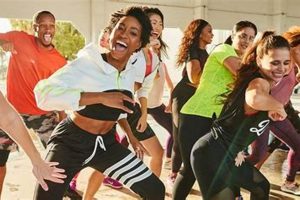
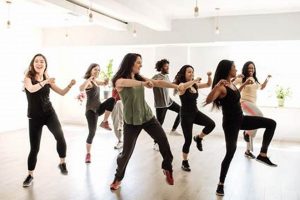
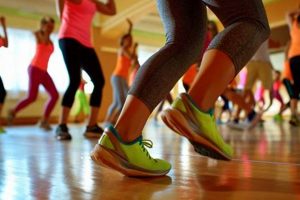
Activities combining aquatic exercise with Latin-inspired dance rhythms offer a unique fitness approach. These sessions, often held in swimming pools, integrate elements of traditional Zumba with the added resistance and buoyancy of water. Participants follow choreographed routines to upbeat music, performing movements that are modified for the aquatic environment.
The incorporation of water resistance enhances muscular engagement, providing a full-body workout with reduced impact on joints. This is particularly beneficial for individuals with arthritis, mobility issues, or those recovering from injuries. The buoyant nature of water allows for a wider range of motion and can make exercise more accessible to diverse populations. Its origin can be traced to the increasing popularity of both traditional Zumba and aquatic fitness programs, culminating in the fusion of the two disciplines to create a distinct exercise modality.
The following sections will delve into the specific health advantages, necessary equipment, safety considerations, and ideal candidate profiles for this specialized form of aquatic fitness.
Tips for Effective Aquatic Dance Fitness Sessions
Engaging in aquatic dance fitness offers numerous benefits. To maximize the experience and ensure safety, consider the following guidelines.
Tip 1: Hydration is Crucial: Prior to, during, and after the session, maintain adequate hydration. Water loss can occur even in aquatic environments due to perspiration and the body’s regulatory processes.
Tip 2: Footwear Considerations: Appropriate aquatic footwear is essential. Shoes designed for water aerobics provide traction and protect feet from the pool floor, reducing the risk of slips or abrasions.
Tip 3: Proper Form Emphasis: Maintain correct posture and form throughout the routines. Focus on engaging core muscles and using controlled movements to prevent strain or injury. If unsure about form, consult the instructor.
Tip 4: Gradual Intensity Increase: Individuals new to this activity should begin with lower-intensity modifications and gradually increase the difficulty as their fitness level improves. Avoid overexertion, especially in the initial stages.
Tip 5: Listen to the Body: Pay close attention to any signals of discomfort or pain. If experiencing sharp or persistent pain, discontinue the activity and seek professional medical advice. Do not push through pain.
Tip 6: Sun Protection: Even when indoors, be mindful of sun exposure near windows or open areas. Apply water-resistant sunscreen to exposed skin to mitigate potential sunburn.
Tip 7: Pool Depth Awareness: Be aware of the pool’s depth and select a location suitable for your height and comfort level. Avoid areas where you cannot comfortably stand or maintain balance.
Adhering to these tips will contribute to a safer, more enjoyable, and more effective aquatic dance fitness experience. Remember that consistency and mindful participation are key to achieving optimal results.
The subsequent sections will cover the specific equipment needs and safety precautions relevant to this activity, ensuring a well-rounded understanding of its practices.
1. Buoyancy

Buoyancy, the upward force exerted by a fluid that opposes the weight of an immersed object, plays a central role in aquatic dance fitness. Its influence on movement mechanics, exercise intensity, and accessibility is significant and warrants detailed consideration.
- Joint Impact Reduction
The buoyant force counteracts gravity, effectively reducing the load on weight-bearing joints. This is particularly beneficial for individuals with arthritis, knee injuries, or other conditions that limit their ability to participate in high-impact activities. Within aquatic dance fitness, this allows for greater range of motion and decreased pain during movements.
- Muscular Effort Modulation
While buoyancy assists with upward movements, the density of water provides resistance during downward or lateral motions. This dual effect allows for a balanced muscular workout. For example, lifting a leg in the water requires less effort due to buoyancy, but controlling the descent engages opposing muscle groups due to water resistance.
- Increased Range of Motion
The decreased joint compression afforded by buoyancy permits a greater range of motion compared to land-based activities. Participants can often perform movements in the water that would be difficult or impossible on land. This is particularly advantageous in aquatic dance fitness, allowing for more expressive and fluid routines.
- Enhanced Stability and Balance
Buoyancy affects the body’s center of gravity, influencing stability and balance. While it can initially present a challenge, the need to constantly adjust to maintain equilibrium engages core muscles and improves proprioception, contributing to overall stability both in and out of the water.
These facets of buoyancy directly impact the experience and benefits derived from Zumba in the water classes. The reduced impact, modulated muscular effort, increased range of motion, and enhanced stability make this form of exercise accessible to a wider range of individuals and contribute to a more comprehensive and enjoyable workout.
2. Resistance

Within aquatic dance fitness, resistance, specifically water resistance, is a core element dictating the intensity and effectiveness of the exercise. The density of water, approximately 800 times greater than air, creates significant resistance against movement. This heightened resistance forces muscles to work harder than they would on land to execute the same motions. The effect is an amplified muscular workout achieved with movements that can be lower impact, reducing the risk of joint stress. An example is extending an arm through the water; the water’s opposition requires greater muscular force compared to extending the arm in open air. This principle forms the foundation for strengthening exercises integrated into aquatic dance fitness routines.
Water resistance is not uniform; it varies based on the speed and surface area of the moving body part. Faster movements generate more resistance, allowing individuals to control the challenge level by adjusting their tempo. Likewise, increasing the surface area of the limb or body part encountering the water by using paddles or altering hand positions, for example further intensifies the resistance. The use of water weights during aquatic dance fitness classes provides another practical application of resistance, amplifying its effect on muscular strength and endurance. Water’s resistance also provides unique tactile feedback to the body that is absent on land.
Understanding and manipulating water resistance is crucial for maximizing the benefits of aquatic dance fitness. It allows for a customizable workout adaptable to diverse fitness levels. The resistance provides a full body workout without the high impact to joints seen in land-based exercises. By harnessing the properties of water, aquatic dance fitness becomes an effective and accessible pathway to improved muscular strength, endurance, and overall fitness.
3. Cardio

Cardiovascular fitness, often referred to as cardio, is a critical component of overall health, and its integration into aquatic dance fitness enhances the benefits derived from the exercise regimen. The rhythmic and continuous movements inherent in this form of exercise elevate heart rate and improve circulatory function.
- Elevated Heart Rate
The choreographed sequences performed during aquatic dance fitness sessions are designed to increase heart rate within a target zone conducive to cardiovascular improvement. Maintaining an elevated heart rate strengthens the heart muscle, improves its efficiency in pumping blood, and reduces the risk of cardiovascular diseases. The added resistance of water compared to air means the heart has to work harder to pump blood, leading to an accelerated effect.
- Increased Oxygen Consumption
As heart rate increases, so does the body’s demand for oxygen. Aquatic dance fitness prompts deeper and more frequent respiration, facilitating increased oxygen uptake and utilization by the muscles. This enhanced oxygen delivery fuels the physical exertion and contributes to improved aerobic capacity. Because water submersion can compress the chest cavity, the body is more efficient and has to extract more oxygen at a faster rate.
- Enhanced Circulation
The hydrostatic pressure of water, the pressure exerted by a fluid on an immersed object, aids in venous return, the process of blood flowing from the extremities back to the heart. This improved circulation reduces swelling, alleviates muscle fatigue, and supports efficient nutrient delivery to tissues. Because the water is cooler than land-based exercise, blood flow is altered for thermoregulation giving added benefit.
- Calorie Expenditure
The combination of rhythmic movements, water resistance, and elevated heart rate translates to significant calorie expenditure during aquatic dance fitness. Consistent participation can contribute to weight management, body composition improvement, and overall metabolic health. The effects of water adding resistance means the body is more likely to burn more calories.
The cardiovascular benefits of engaging in aquatic dance fitness are multifaceted. The sustained elevation of heart rate, increased oxygen consumption, enhanced circulation, and calorie expenditure contribute synergistically to improved cardiovascular health and overall well-being, making it a worthwhile exercise option.
4. Coordination
Coordination, defined as the ability to execute smooth, accurate, and controlled movements, is a fundamental element within the context of aquatic dance fitness. It directly influences participants’ proficiency, enjoyment, and safety within these structured exercise programs. The aquatic environment introduces unique challenges to motor control, making coordination a crucial skill to develop and refine.
- Neuromuscular Synchronization
Aquatic dance fitness necessitates the synchronized activation of multiple muscle groups to perform choreographed sequences. This requires the nervous system to efficiently transmit signals to muscles, ensuring proper timing and sequencing of contractions. For example, executing a grapevine step in water demands coordinated activation of leg, core, and arm muscles to maintain balance and rhythm. Inadequate neuromuscular synchronization can lead to awkward movements, loss of balance, and potential for injury.
- Spatial Awareness and Body Positioning
The buoyant nature of water alters proprioception, the body’s sense of its position in space. Participants must adapt to this altered sensory feedback to maintain correct body alignment and navigate the aquatic environment effectively. Successfully executing turns, leaps, and other dynamic movements within aquatic dance fitness requires heightened spatial awareness and precise control over body positioning. Failure to adapt to changes in spatial awareness can result in collisions with other participants or the pool walls.
- Timing and Rhythm
Aquatic dance fitness relies heavily on musicality, requiring participants to synchronize their movements with the beat and rhythm of the music. This demands precise timing and an ability to translate auditory cues into coordinated physical actions. For example, performing a series of cha-cha steps in time with the music requires a well-developed sense of rhythm and the ability to execute the movements with accuracy and fluidity. Poor timing can disrupt the flow of the choreography and diminish the overall effectiveness of the workout.
- Adaptation to Water Resistance
Water resistance adds an additional layer of complexity to movement control. Participants must learn to adjust their movements to overcome the resistance encountered, requiring greater force and precision. For example, extending an arm through the water against resistance requires controlled muscle engagement and precise timing to maintain the desired trajectory and rhythm. Failure to adapt to water resistance can lead to fatigue, inefficient movement patterns, and increased risk of muscle strain.
These facets of coordination are integral to successful and safe participation in aquatic dance fitness. The development and refinement of neuromuscular synchronization, spatial awareness, timing, and adaptation to water resistance allows participants to maximize the benefits of the activity, improving cardiovascular fitness, muscular strength, and overall well-being. Furthermore, enhanced coordination translates to improved motor skills and balance outside the aquatic environment, contributing to greater functional independence and reduced risk of falls.
5. Adaptability
Adaptability is a central characteristic of successful participation in aquatic dance fitness. The ability to modify movements and routines to accommodate individual needs and limitations is crucial for ensuring inclusivity, safety, and optimal engagement within these exercise programs.
- Modification for Fitness Level
Aquatic dance fitness routines often incorporate movements that can be challenging for individuals with varying fitness levels. Adaptability involves offering scaled-down or simplified versions of these movements to accommodate beginners or those with limited strength or endurance. For example, a high-impact jumping jack can be modified into a low-impact step-out, preserving the cardiovascular benefit while reducing stress on joints. Instructors should provide modifications and encourage participants to select options that align with their individual capabilities.
- Accommodation of Physical Limitations
Participants with pre-existing injuries, arthritis, or other physical limitations may require further adjustments to the routines. Adaptability entails modifying movements to avoid exacerbating these conditions. For example, individuals with shoulder impingement may need to limit overhead movements, while those with knee pain may need to avoid deep squats or lunges. Instructors should be knowledgeable about common physical limitations and be prepared to offer appropriate modifications or alternative exercises.
- Adjustments for Water Depth and Buoyancy
Water depth and buoyancy significantly impact the execution of movements in aquatic dance fitness. Adaptability involves adjusting the amplitude and intensity of movements based on the water depth and the participant’s buoyancy level. For example, individuals with high buoyancy may need to exert more effort to maintain contact with the pool floor, while those in deeper water may need to modify their arm movements to maintain balance. Participants should be mindful of their body’s response to the aquatic environment and adjust their movements accordingly.
- Individual Expression and Personalization
While aquatic dance fitness routines provide a structured framework for exercise, adaptability also encompasses allowing participants to express themselves and personalize their movements. This can involve adding their own flair to the choreography, modifying movements to suit their individual preferences, or incorporating their own cultural influences. Encouraging individual expression enhances engagement, fosters a sense of community, and promotes a more enjoyable and sustainable fitness experience.
The incorporation of adaptability principles is essential for maximizing the benefits of aquatic dance fitness for a diverse range of individuals. By offering modifications, accommodating physical limitations, adjusting for water depth and buoyancy, and encouraging individual expression, these programs can be made accessible, safe, and enjoyable for all participants.
6. Socialization

Participation in “zumba in the water classes” extends beyond physical exercise, fostering a sense of community and facilitating social interaction among participants. The shared experience of learning choreographed routines and exercising in a group setting creates opportunities for individuals to connect, build relationships, and form social bonds. This social aspect of the activity can be a significant motivator for continued participation and adherence to a fitness regimen.
The group dynamic inherent in these classes often leads to increased engagement and enjoyment. Participants are more likely to push themselves and remain consistent with their exercise routines when they feel a sense of belonging and support from their peers. For instance, individuals may form carpools to attend classes together, share healthy recipes, or provide encouragement during challenging exercises. These interactions reinforce positive behaviors and contribute to a more holistic and sustainable approach to fitness. Furthermore, instructors often play a key role in cultivating a welcoming and inclusive environment, fostering a sense of camaraderie among participants. The shared laughter and camaraderie contribute to an enjoyable atmosphere, encouraging continued participation.
Socialization within “zumba in the water classes” offers a valuable dimension beyond physical well-being. By creating a supportive community and promoting social interaction, these programs address not only physical health, but also social and emotional needs. The practical significance of this understanding lies in the recognition that fitness is not solely an individual pursuit, but can be enhanced through the power of shared experiences and social connections, thereby increasing participation and adherence to fitness routines.
Frequently Asked Questions about Zumba in the Water Classes
The following section addresses common inquiries regarding participation, benefits, and practical considerations related to this form of aquatic exercise. These questions are designed to provide clarity and comprehensive information to prospective participants.
Question 1: What are the fundamental differences between traditional Zumba and Zumba in the Water Classes?
Traditional Zumba is a land-based dance fitness program, whereas Zumba in the Water Classes is conducted in a swimming pool. The aquatic environment provides buoyancy, reducing joint impact, and water resistance, increasing muscular effort. Choreography is modified to accommodate these aquatic properties.
Question 2: Are specific swimming skills required to participate in Zumba in the Water Classes?
While proficiency in swimming is not mandatory, a basic comfort level in water is recommended. Participants should be able to stand comfortably in chest-deep water and maintain balance. Instructors often provide modifications for varying comfort levels.
Question 3: What are the primary health benefits associated with Zumba in the Water Classes?
The activity offers numerous health benefits, including improved cardiovascular fitness, increased muscular strength and endurance, reduced joint stress, enhanced range of motion, and calorie expenditure. The social interaction also contributes to mental and emotional well-being.
Question 4: What type of attire and equipment is recommended for attending Zumba in the Water Classes?
Appropriate swimwear is essential. Water shoes are recommended to provide traction and protect feet. Some individuals may opt for aquatic fitness gloves or water weights to further enhance resistance. Hydration is also crucial; participants should bring a water bottle.
Question 5: Are there any specific health conditions that would contraindicate participation in Zumba in the Water Classes?
Individuals with certain medical conditions, such as uncontrolled hypertension, severe heart conditions, open wounds, or infectious diseases, should consult their physician before participating. The buoyancy of water may also negatively affect some individuals. Pregnant women should also seek medical advice prior to participation.
Question 6: How can one locate qualified instructors and reputable Zumba in the Water Classes programs?
Certified Zumba instructors are typically licensed to teach both land-based and aquatic Zumba classes. Inquiring about an instructor’s credentials and experience is advisable. Reputable programs are often offered at community centers, YMCAs, fitness clubs, and aquatic facilities. Checking online reviews and seeking recommendations can also be helpful.
In summary, Zumba in the Water Classes offers a unique and accessible fitness option with numerous physical and social benefits. Understanding the fundamentals and addressing potential concerns ensures a safe and enjoyable experience.
The next section will delve into practical considerations for implementing this activity into a broader fitness plan.
Conclusion
This exposition has detailed the multifaceted aspects of “zumba in the water classes,” underscoring its synthesis of aquatic exercise and dance fitness principles. The analysis covered the advantages of buoyancy and resistance, as well as the impact of social and adaptable components. These elements, when correctly applied, yield a comprehensive exercise regimen applicable to varied populations.
Acknowledging the potential benefits, individuals and organizations seeking viable fitness solutions may further investigate the practical implications of this modality. The synthesis of aquatic exercise and dance fitness possesses potential that merits continued exploration and implementation, and with proper instruction it may hold significant value.