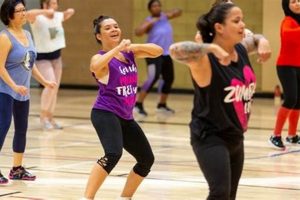
Scheduled fitness activities conducted shortly after dawn, incorporating the Zumba dance fitness program, constitute a specific segment within the group exercise landscape. These sessions combine aerobic exercise with Latin-inspired dance movements. They are typically held before traditional working hours to accommodate individuals with structured daytime schedules.
Participation in such routines can offer several advantages. Early exercise may contribute to enhanced metabolic function throughout the day. Furthermore, the social interaction inherent in group fitness can promote mental well-being. The historical proliferation of group exercise classes, including dance-based formats, reflects a growing awareness of the benefits of physical activity beyond traditional gym settings.
The subsequent sections will address the practical considerations for individuals interested in participating in these sessions, including the selection of appropriate attire, nutritional strategies for pre-workout fueling, and techniques for maximizing the cardiovascular benefits obtained during the activity.
Guidance for Optimizing Participation in Early Fitness Dance Programs
The following guidelines aim to enhance the experience and maximize the benefits derived from participation in fitness dance programs scheduled for early morning hours. Careful consideration of these factors can contribute to improved performance and overall well-being.
Tip 1: Hydration is Paramount: Prioritize fluid intake both before and during the session. Dehydration can impair performance and exacerbate fatigue. Water or electrolyte-enhanced beverages are suitable choices.
Tip 2: Strategic Fueling: Consume a light, easily digestible meal or snack approximately 30-60 minutes before the activity. Options include a banana, a small serving of oatmeal, or a piece of whole-wheat toast with a light spread.
Tip 3: Gradual Warm-up: Arrive early to allow for a thorough warm-up routine. This prepares the muscles for activity and reduces the risk of injury. Include dynamic stretching exercises.
Tip 4: Appropriate Attire: Wear comfortable, breathable clothing that allows for a full range of motion. Supportive athletic shoes are essential for foot and ankle stability.
Tip 5: Pacing and Modification: Listen to the body’s signals and modify movements as needed. Beginners should start at a slower pace and gradually increase intensity as fitness improves.
Tip 6: Focused Engagement: Concentrate on proper form and technique throughout the routine. This maximizes the effectiveness of the exercises and minimizes the risk of injury.
Tip 7: Cool-down and Stretching: Dedicate time for a cool-down period following the session. Static stretching exercises help to improve flexibility and reduce muscle soreness.
Consistent adherence to these recommendations can lead to enhanced cardiovascular health, improved muscle tone, and increased energy levels. The implementation of these strategies allows individuals to derive maximum benefits from their involvement.
The subsequent segment will provide information regarding the integration of these fitness activities into a comprehensive wellness plan.
1. Schedule

The “Schedule” assumes a paramount role in the viability and effectiveness of fitness dance sessions conducted in the early morning. Its strategic design and individual adherence directly influence participation rates, physiological adaptation, and the overall sustainability of the program.
- Time Allocation and Conflict Resolution
This facet addresses the practical integration of the fitness routine into pre-existing daily commitments. Successful incorporation necessitates careful assessment of available time, potential conflicts with work or family obligations, and the establishment of a consistent and manageable schedule. For example, an individual with a 9:00 AM meeting cannot consistently attend a class concluding at 8:30 AM without experiencing undue stress or compromising professional responsibilities.
- Circadian Rhythm and Physiological Response
The body’s natural circadian rhythm influences physiological processes, including hormone secretion and energy levels. Scheduling physical activity during a period of relative wakefulness can optimize metabolic function and enhance the effectiveness of the workout. However, consideration must be given to individual chronotypes, as “morning people” may experience greater benefits from dawn exercise compared to “evening people.”
- Program Consistency and Habit Formation
Adherence to a fixed schedule promotes habit formation and increases the likelihood of long-term participation. Predictability reduces the cognitive burden associated with decision-making and minimizes the probability of skipping sessions due to perceived inconvenience. For example, recurring appointments at the same time each week contribute to the automatization of the exercise routine.
- Recovery and Rest Considerations
The “schedule” must accommodate adequate rest and recovery periods to prevent overtraining and injury. Consistent physical exertion without sufficient recuperation can lead to diminished performance and increased susceptibility to musculoskeletal problems. Strategic scheduling includes incorporating rest days and varying the intensity of workouts to optimize physiological adaptation.
In conclusion, the construction and maintenance of a well-considered schedule are integral to maximizing the benefits derived from fitness dance programs. Balancing personal obligations, physiological considerations, and the principles of habit formation ensures sustained participation and optimizes overall health outcomes.
2. Intensity

The parameter of exertion, commonly referred to as intensity, plays a crucial role in determining the physiological impact and effectiveness of fitness dance programs conducted during the early morning hours. Careful modulation of intensity is essential to optimize cardiovascular benefits, promote metabolic adaptations, and minimize the risk of adverse events.
- Heart Rate Modulation
Heart rate serves as a quantifiable indicator of cardiovascular stress during exercise. Monitoring heart rate during a morning session allows participants to maintain a target training zone, thereby maximizing aerobic conditioning. Elevated heart rates, exceeding recommended thresholds, can lead to fatigue and increase the risk of cardiac strain. Conversely, insufficient exertion may limit the attainment of desired cardiovascular improvements. The appropriate heart rate zone depends on individual fitness levels and age.
- Rate of Perceived Exertion (RPE)
RPE provides a subjective measure of exertion based on individual perception. Participants self-assess their overall feeling of effort on a numerical scale, typically ranging from 6 to 20. This metric allows for adjustments in intensity based on individual tolerance and fatigue levels. In early morning sessions, RPE can be particularly useful in accommodating variations in sleep quality and energy levels.
- Metabolic Demand and Caloric Expenditure
Intensity directly correlates with metabolic demand and caloric expenditure. Higher-intensity segments of a morning dance routine require greater energy utilization, contributing to fat oxidation and weight management. However, excessive intensity without adequate preparation can deplete glycogen stores and lead to premature fatigue. Balancing high-intensity intervals with lower-intensity recovery periods is crucial for sustaining effort throughout the session.
- Impact on Musculoskeletal System
Elevated intensity places increased stress on the musculoskeletal system. High-impact movements, such as jumping and plyometrics, can strain joints and increase the risk of injury. Modification of these movements or selection of low-impact alternatives becomes necessary, especially for individuals with pre-existing musculoskeletal conditions or limited fitness levels. Careful attention to proper form and technique further mitigates the risk of injury.
In summary, the strategic management of intensity is paramount for optimizing the health benefits and ensuring the safety of participants. The interplay between objective measures, such as heart rate, and subjective assessments, such as RPE, allows for personalized adjustments to accommodate individual needs and limitations. Responsible integration of intensity contributes to the overall effectiveness and sustainability of early morning fitness dance programs.
3. Community

The social component within fitness dance sessions scheduled for the early morning is a multifaceted entity. Its presence significantly influences participation rates, adherence to the program, and the overall perceived value of the activity. The communal aspect transcends mere co-location and engenders a sense of collective purpose and mutual support.
- Social Support and Motivation
The presence of peers engaging in the same activity fosters a sense of accountability and mutual encouragement. Individuals are more likely to attend scheduled sessions and maintain consistent participation when embedded within a supportive social network. Shared experiences and collective goal setting contribute to heightened motivation and a reduced likelihood of attrition. The dynamic of encouragement can be a critical factor, especially on days when individual motivation is lacking.
- Shared Identity and Belonging
Consistent interaction within a group of individuals pursuing a common fitness objective cultivates a shared identity. Participants identify as members of a distinct group and develop a sense of belonging. This shared identity can reinforce positive attitudes towards physical activity and enhance adherence to the program. The feeling of belonging can also extend beyond the confines of the scheduled sessions, fostering social connections outside of the class environment.
- Knowledge Sharing and Learning
The communal setting provides opportunities for knowledge sharing and peer-to-peer learning. Experienced participants can offer guidance and support to newcomers, facilitating skill development and preventing discouragement. This informal knowledge transfer supplements the formal instruction provided by the instructor and contributes to a more inclusive and supportive environment. Tips on technique, nutrition, and recovery strategies are commonly exchanged.
- Reduced Perceived Exertion and Enhanced Enjoyment
The social interaction inherent in group fitness can reduce the perceived exertion associated with physical activity. Engaging in conversation and experiencing camaraderie diverts attention from the physical challenges, making the exercise session more enjoyable. This enhanced enjoyment contributes to increased adherence and a more positive overall experience. The social element can transform what might otherwise be a solitary and potentially arduous task into a more pleasurable and sustainable activity.
The confluence of social support, shared identity, knowledge sharing, and enhanced enjoyment underscores the significance of the communal dimension within these dance programs. This element contributes significantly to the long-term viability and effectiveness of the activity, fostering a sense of collective commitment and maximizing the benefits derived from participation.
4. Hydration

Optimal hydration is a crucial component of any physical activity, particularly fitness dance sessions conducted during early morning hours. The body loses fluids through perspiration during exercise, and this loss is exacerbated by the potentially dehydrated state individuals may experience upon waking. Insufficient fluid intake can impair performance, increase the risk of muscle cramps, and negatively impact cardiovascular function. Prior to commencing a vigorous early morning dance routine, adequate hydration serves as a preventative measure against these adverse effects.
The impact of hydration on performance can be readily observed. For instance, an individual who forgoes fluid intake before a dawn session may experience premature fatigue, reduced coordination, and an increased heart rate relative to their hydrated counterpart. Dehydration thickens the blood, placing a greater strain on the cardiovascular system to deliver oxygen to working muscles. In contrast, proper hydration facilitates efficient nutrient transport, maintains electrolyte balance, and supports optimal thermoregulation, allowing participants to sustain activity levels and derive maximum cardiovascular benefits. A practical example includes consuming 16-20 ounces of water in the hours preceding the class and continuing to sip water throughout the session. Electrolyte-enhanced beverages can further mitigate the loss of essential minerals through sweat.
Sustaining adequate hydration levels is not merely a matter of convenience; it is a physiological necessity. The integration of hydration strategies into pre- and during-activity routines addresses the inherent challenges of early morning exercise. It optimizes performance, mitigates health risks, and enhances the overall effectiveness of the fitness dance program. Disregarding this essential element undermines the potential benefits and may lead to counterproductive outcomes. A consistent focus on hydration is, therefore, an indispensable component of participation.
5. Technique

The adherence to proper technique within fitness dance sessions is paramount, particularly when these activities are conducted during early morning hours. Executing movements with precision and control is essential to maximize efficacy, mitigate injury risk, and promote long-term participation.
- Posture and Alignment
Maintaining correct posture and alignment is fundamental to effective movement and injury prevention. This entails ensuring a neutral spine, engaged core muscles, and proper joint articulation throughout the dance routine. For example, improper spinal alignment during high-impact movements can exacerbate stress on the lumbar region, increasing the risk of back pain. Conversely, correct posture distributes forces evenly and enhances the efficiency of movement.
- Footwork and Ground Reaction Forces
Precise footwork and controlled ground reaction forces are critical elements, especially in dance-based fitness activities. Proper technique involves landing softly on the balls of the feet, absorbing impact forces through the lower extremities, and avoiding excessive joint stress. Incorrect footwork can lead to injuries, such as ankle sprains, shin splints, or knee pain. Controlled footwork minimizes impact and promotes efficient movement patterns.
- Range of Motion and Flexibility
Executing movements through a full range of motion is essential for maximizing muscle activation and improving flexibility. However, it is equally important to avoid exceeding individual limitations, particularly in early morning sessions when muscles may be less pliable. Gradually increasing range of motion through dynamic stretching and controlled movements enhances joint mobility and reduces the risk of muscle strains or tears. Forced or ballistic stretching can be detrimental.
- Muscle Engagement and Coordination
Effective muscle engagement and coordination are prerequisites for optimal performance and injury prevention. Engaging the appropriate muscles at the correct time ensures efficient movement patterns and reduces the strain on passive structures, such as ligaments and tendons. For example, core muscle activation is essential for stabilizing the spine during dynamic movements. Coordination between muscle groups allows for smooth and controlled transitions between dance steps.
The integration of these facets of technique into early morning fitness dance routines is crucial for optimizing participant safety and effectiveness. Emphasizing proper form over speed or intensity allows individuals to derive maximum benefits while minimizing the risk of adverse outcomes. Sustained adherence to correct technique contributes to long-term participation and improved overall fitness levels.
6. Consistency

Sustained adherence to a structured exercise regimen, exemplified by regular attendance at fitness dance sessions commencing at dawn, plays a pivotal role in achieving long-term health and wellness objectives. Consistency transcends sporadic participation and constitutes a commitment to integrating physical activity into the fabric of daily life. The benefits derived from these activities are directly proportional to the unwavering maintenance of a regular schedule.
- Habit Formation and Behavioral Reinforcement
Consistent engagement in fitness dance programs fosters the development of habitual exercise patterns. The repetition of a specific activity at a designated time reinforces neural pathways, making the behavior increasingly automatic and reducing the cognitive effort required for initiation. For example, individuals who consistently attend sessions on Mondays, Wednesdays, and Fridays are more likely to maintain this schedule compared to those with irregular attendance. This behavioral reinforcement contributes to the sustainability of the exercise routine over extended periods.
- Physiological Adaptation and Progressive Overload
Consistent participation allows the body to adapt progressively to the physical demands imposed by the exercise program. Regular exposure to dance movements and cardiovascular challenges stimulates physiological adaptations, such as increased cardiovascular efficiency, improved muscle strength, and enhanced metabolic function. This progressive overload, achieved through consistent application of stress, is essential for achieving measurable improvements in fitness levels. Sporadic participation fails to elicit the sustained physiological adaptations necessary for achieving significant health benefits.
- Mental Discipline and Stress Management
Maintaining consistency in an exercise routine requires mental discipline and the ability to overcome obstacles or competing priorities. The commitment to attend sessions, even when faced with challenges, strengthens mental resilience and promotes a sense of accomplishment. Furthermore, consistent engagement in physical activity has been shown to reduce stress levels, improve mood, and enhance cognitive function. The psychological benefits derived from consistent exercise contribute to overall well-being and a greater capacity to cope with daily stressors.
- Long-Term Health Outcomes and Disease Prevention
The cumulative effect of consistent physical activity extends beyond immediate fitness improvements and contributes significantly to long-term health outcomes. Regular participation in fitness dance programs is associated with a reduced risk of chronic diseases, such as cardiovascular disease, type 2 diabetes, and certain types of cancer. Furthermore, consistent exercise promotes healthy aging, maintains functional independence, and enhances quality of life. The benefits of consistent physical activity accrue over time and contribute to a longer and healthier lifespan.
The interconnectedness of habit formation, physiological adaptation, mental discipline, and long-term health outcomes underscores the critical role of consistency in maximizing the benefits derived from fitness dance programs. Embracing a commitment to sustained participation is essential for achieving meaningful and lasting improvements in physical and mental well-being. The strategic integration of these activities into a regular schedule is a prerequisite for achieving optimal health outcomes.
Frequently Asked Questions
This section addresses common inquiries regarding participation in Zumba fitness activities scheduled for early morning hours. The information presented aims to provide clarity and promote informed decision-making.
Question 1: Are these sessions suitable for individuals with no prior dance experience?
Yes, these sessions are generally designed to accommodate participants of varying fitness levels and dance backgrounds. Instructors typically provide modifications and progressions to cater to individual needs. Beginners are encouraged to start at a slower pace and gradually increase intensity as their comfort level increases.
Question 2: What are the primary benefits of participating in an exercise program at dawn?
Engagement in physical activity shortly after waking can offer several advantages, including enhanced metabolic function throughout the day, increased alertness and cognitive performance, and improved adherence to a consistent fitness routine due to reduced scheduling conflicts. Early exercise may also contribute to a more positive mood and reduced stress levels.
Question 3: Is there a specific dietary protocol recommended prior to engaging in this sort of physical activity?
Consuming a light and easily digestible meal or snack approximately 30-60 minutes prior is recommended. Options include a piece of fruit, a small serving of oatmeal, or a light carbohydrate source. Adequate hydration is also essential. Avoid consuming heavy or processed foods that may lead to digestive discomfort during the session.
Question 4: What type of attire and footwear is most appropriate for these exercise routines?
Comfortable, breathable clothing that allows for a full range of motion is recommended. Supportive athletic shoes with good shock absorption are essential to protect the feet and ankles. Avoid wearing restrictive clothing or shoes that may impede movement or increase the risk of injury.
Question 5: How does one mitigate the risk of injury during these fitness activities?
A thorough warm-up prior to each session is crucial. Listen to the body’s signals and modify movements as needed. Pay attention to proper form and technique. Avoid pushing beyond individual limits, particularly in early morning hours when muscles may be less pliable. Adequate hydration and a proper cool-down routine are also important preventative measures.
Question 6: How frequent should one participate to realize significant health improvements?
Consistent participation is key. Aim for a minimum of three sessions per week to achieve measurable improvements in cardiovascular health, muscle tone, and overall fitness levels. However, individual needs and limitations should be considered. Consult with a healthcare professional or certified fitness trainer for personalized recommendations.
The information detailed above provides a foundation for understanding key considerations related to early morning fitness dance programs. Prioritizing safety, proper nutrition, and sustained commitment is essential for maximizing the potential benefits.
The subsequent section will address the integration of these practices into a holistic wellness plan.
Early Morning Zumba Classes
The preceding analysis has explored various facets of fitness dance programs conducted in the early morning, focusing on schedule optimization, intensity modulation, community influence, hydration strategies, technical precision, and sustained consistency. These elements, when effectively integrated, contribute to a holistic fitness experience with demonstrable health benefits.
Continued investigation into the long-term impact of these structured physical activities on diverse populations remains crucial. Individuals are encouraged to consult with healthcare professionals to ascertain the suitability of these programs and to tailor participation according to personalized health profiles. The collective pursuit of wellness through evidence-based practices warrants ongoing attention and rigorous evaluation.